Beyond the Inbox: Simple Tweaks for 30%+ Email Open Rates
how to increase e mail open rates
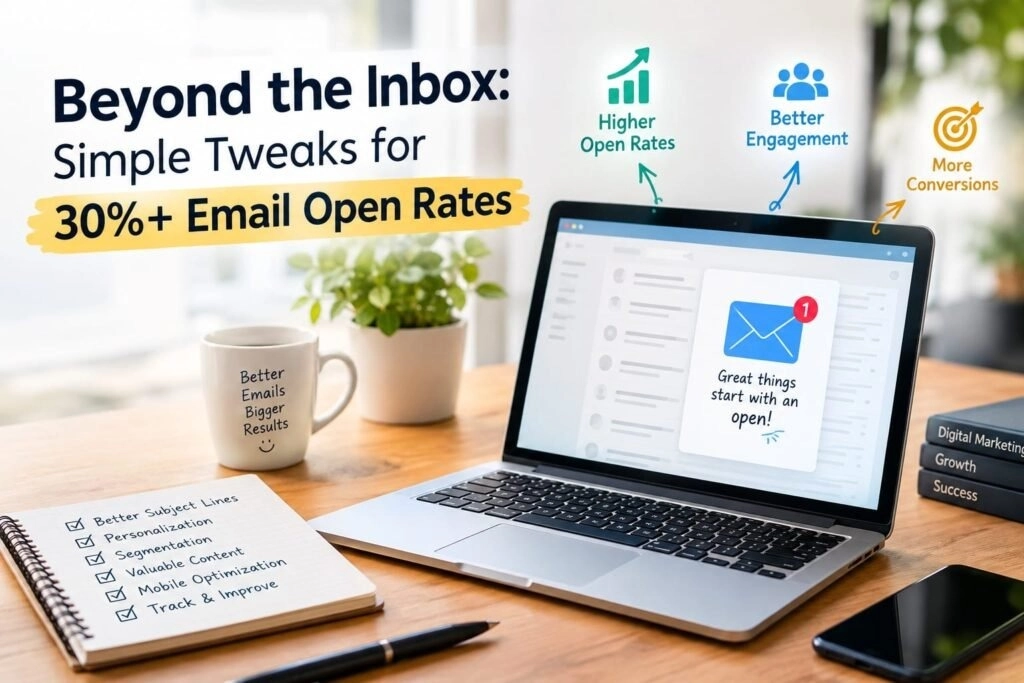
In today’s competitive digital landscape, email marketing remains one of the most effective ways to connect with customers, nurture leads, and increase conversions. However, getting recipients to open emails and take action can be challenging. Beyond the Inbox: Simple Tweaks for 30%+ Email Open Rates explores practical strategies to improve email engagement. Working with a freelance digital marketing expert in Palakkad can also help businesses create targeted campaigns, optimize subject lines, and reach the right audience with relevant content.
But how to increse e mail open rates without increasing your marketing budget? The key is to understand your audience, improve email deliverability, and create messages that capture attention. Using compelling subject lines, personalizing content, choosing suitable sending times, and maintaining a clean subscriber list can improve engagement and strengthen customer relationships. In this blog, we explore practical email marketing techniques to help you work toward a 30% or higher open rate and build lasting connections with your subscribers.
Beyond the Inbox: Simple Tweaks for 30%+ Email Open Rates Starts with Compelling Subject Lines
I believe the subject line is the first thing subscribers notice when your email lands in their inbox. It tells them whether to open the email, ignore it, or delete it. Even if your email contains valuable information, a weak subject line can prevent readers from discovering it. If you want to learn how to increase e mail open rates, focus on writing subject lines that are clear, relevant, and interesting.
A strong subject line should communicate the benefit of the email in a short and appealing way. Showing the value of the email helps readers understand what they can learn, fix, or gain by opening it. You can also spark curiosity without making false promises. Personalizing the subject line, for example, by adding a subscriber’s name or mentioning a topic that interests them, can make the email feel more relevant. Additionally, avoid using too many exclamation marks, all-caps words, or exaggerated promises, as these can make your email look untrustworthy.
For example, instead of using a generic subject line like “Our Latest Marketing Updates,” write “5 Email Marketing Tweaks to Improve Engagement.” The second option gives readers a clear reason to open the email. To understand how to increase e mail open rates, always make sure your subject line matches the email content. Although a misleading headline might create curiosity, it can damage trust and increase unsubscribe rates over time.
Personalize Your Emails to Make Subscribers Feel Valued
Modern consumers receive promotional messages from numerous businesses every day. Generic emails often struggle to stand out because they do not address the specific needs or interests of the recipient. Personalization is an effective strategy for businesses learning how to increase e mail open rates by delivering messages that reflect what different groups of subscribers actually want to receive. Instead of sending the same email to your entire subscriber list, consider how you can adapt your communication to match individual interests and customer behavior.
One effective personalization strategy is audience segmentation, which involves dividing subscribers into groups based on their interests, purchase history, engagement levels, or stage in the customer journey. You can also recommend products, services, or resources that match their preferences. Behavior-based emails, such as welcome messages for new subscribers, follow-up emails after purchases, and helpful recommendations based on previous interactions, can make your communication more timely and useful. Customizing email content for different audience segments helps ensure that each message has a clear purpose.
For example, an online clothing store might send new-arrival updates to frequent shoppers while sharing styling tips with subscribers who regularly engage with fashion-related content. This approach helps businesses provide useful information instead of sending irrelevant messages to everyone. By delivering personalized and relevant emails, businesses can learn how to increase e mail open rates while building stronger relationships with subscribers.
promotions. When subscribers receive content that matches their interests, they have more reasons to open future emails, engage with the content, and maintain a positive relationship with the brand.
Find the Right Time to Send Your Emails
Timing can influence email engagement, but there is no universal sending time that guarantees higher open rates. If you want to learn how to increase email open rates, consider your audience’s location, daily habits, and the type of email you are sending. Understanding when subscribers are most likely to check their inbox can help improve campaign performance.
Start by reviewing previous campaign results and testing different sending times, including mornings, afternoons, evenings, and weekends. Consider your subscribers’ time zones and work schedules when planning campaigns. Maintaining a consistent schedule can also help subscribers become familiar with your emails without overwhelming them.
For example, a business-to-business company might test weekday morning campaigns, while a consumer-focused brand may experiment with evening or weekend emails. These are starting points, not guaranteed solutions. Analyze your results regularly and adjust your sending schedule to find what works best for your audience.
Beyond the Inbox: Simple Tweaks for 30%+ Email Open Rates Through Audience Segmentation
Sending more emails does not automatically produce better results. Sending fewer but more relevant emails can improve engagement and strengthen customer relationships. If you want to understand how to increase email open rates, audience segmentation is an effective strategy. It helps businesses deliver messages based on subscribers’ interests, behavior, and needs.
Email segmentation improves relevance by ensuring subscribers receive content that matches their interests. It also reduces unnecessary promotions and makes campaign testing more effective. Businesses can segment their email lists based on demographics, previous purchases, website interactions, expressed interests, and email engagement.
For example, a digital marketing agency can create separate campaigns for business owners interested in SEO, social media marketing, and paid advertising. Each group receives relevant information, making emails more useful and engaging. Always respect subscriber privacy, collect only necessary information, and follow applicable email marketing and data protection requirements.
Write Valuable Email Content That Encourages Engagement
Getting someone to open your email is only the beginning. If you want to learn how to increase email open rates, focus on providing valuable content that keeps subscribers interested. A balanced email marketing strategy combines promotional messages with useful information, educational content, practical advice, and meaningful updates that address your audience’s needs.
One effective approach is to solve common problems your readers experience. Share actionable tips, exclusive insights, helpful resources, and relevant updates. Keep your message focused so readers can quickly understand its purpose and benefit.
Every email should also include a clear call to action, encouraging readers to visit a blog post, explore a service, download a resource, or learn more about a product. For example, a digital marketing professional could share tips for improving website traffic and link to a detailed guide on SEO best practices.
Providing relevant and helpful content builds trust and strengthens customer relationships. When subscribers consistently receive valuable emails, they have more reasons to stay subscribed and engage with future campaigns, supporting long-term email marketing success.
Improve Email Deliverability and Build Sender Trust
Even the most attractive subject line cannot help if your email fails to reach the inbox. If you want to learn how to increase email open rates, improving email deliverability is an essential step. Poor list quality, authentication issues, and negative engagement signals can cause emails to land in spam folders or fail to reach subscribers.
Start by using permission-based email lists and sending messages only to people who have agreed to receive them. Configure SPF, DKIM, and DMARC for your sending domain, regularly remove invalid email addresses, and monitor spam complaints. Providing a clear unsubscribe option also helps subscribers manage their preferences.
Use a recognizable sender name and ensure your subject lines and email content accurately represent your message. Consistent sender details help subscribers identify and trust your emails.
By combining proper email authentication, responsible list management, and relevant content, businesses can improve deliverability, build subscriber trust, and create better opportunities for increased email engagement.
Beyond the Inbox: Simple Tweaks for 30%+ Email Open Rates with A/B Testing
Email marketing should not rely entirely on assumptions because a strategy that works for one audience may not work for another. If you want to learn how to increase email open rates, A/B testing helps you compare different email versions and identify which elements perform better. This allows you to make informed decisions and improve your campaigns over time.
Subject lines are one of the most useful elements to test. Compare benefit-focused headlines with curiosity-driven alternatives, or experiment with preview text, sender names, sending times, and audience segments. For example, you could compare “Your Guide to Better Email Marketing” with “5 Ways to Improve Your Email Campaigns” to see which generates stronger engagement.
For reliable results, test one major variable at a time, use sufficiently large audience groups, and repeat tests when necessary. Since email privacy features can affect reported open rates, track click-through rates and conversions alongside opens to evaluate your campaign’s overall performance.
Optimize Your Emails for Mobile Devices
Many people check their emails on smartphones, making mobile optimization essential for successful email marketing. If you want to learn how to increase email open rates, creating a mobile-friendly experience is an important step. Emails that look crowded or difficult to read on small screens may discourage subscribers from engaging with your content.
Start by using responsive email templates that adapt to different screen sizes. Keep paragraphs short, use readable font sizes, and avoid overcrowding your emails with unnecessary design elements. Make buttons and links easy to tap, and optimize images for faster loading.
Before sending a campaign, preview your emails across different devices and email clients to identify layout issues. Pay attention to subject lines and preview text, keeping the most important information near the beginning so readers can quickly understand your message.
A clear, responsive design improves readability and makes your call to action easier to find. By providing a convenient experience across devices, businesses can encourage stronger engagement and support better email marketing performance.
Track the Right Metrics Instead of Focusing Only on Open Rates
A 30% email open rate is a useful target, but results vary by industry, audience, and email quality. If you want to learn how to increase email open rates, track key metrics such as open rate, click-through rate, conversion rate, bounce rate, unsubscribes, and spam complaints.
Email privacy features can affect reported open rates, so avoid relying on opens alone. If your emails receive opens but few clicks, improve your subject lines, content, and call to action. Regularly reviewing campaign performance helps you optimize your email marketing strategy, engage subscribers, and achieve better business results.
Create a Consistent Email Marketing Strategy
Successful email marketing requires consistency, valuable content, and regular performance tracking. If you want to learn how to increase email open rates, create a content calendar with useful newsletters, educational resources, and relevant promotions. Set clear campaign goals and choose a sending frequency that suits your audience.
Maintain a clean subscriber list, monitor engagement, and review campaign results regularly. Test different subject lines, content, and sending times to discover what works best. These simple improvements can increase email engagement, strengthen customer relationships, and support better marketing results.
.
Conclusion:
Beyond the Inbox: Simple Tweaks for 30%+ Email Open Rates
Improving email engagement does not always require complicated tools or a larger marketing budget. If you want to learn how to increase email open rates, start with small, strategic changes that make your emails more relevant, recognizable, and valuable to subscribers. Understanding your audience and improving communication can help strengthen customer relationships and support better marketing results.
As explored in Beyond the Inbox: Simple Tweaks for 30%+ Email Open Rates, effective email marketing involves writing compelling subject lines, personalizing messages, testing sending times, segmenting audiences, creating useful content, improving deliverability, optimizing for mobile devices, and monitoring performance metrics. These strategies can help businesses understand how to increase email open rates while improving overall campaign performance.
Remember that a 30% or higher open rate is a goal, not a guaranteed result. Actual performance depends on your audience, industry, email practices, and measurement methods. Instead of focusing on a single number, prioritize continuous improvement and meaningful campaign results.
Start by testing different subject lines, reviewing your subscriber list, improving email content, and analyzing campaign performance. Over time, these efforts can help you build stronger connections with your audience and achieve better marketing outcomes.
Ultimately, successful email marketing means delivering the right message to the right audience at the right time. When your emails provide genuine value and respect subscriber preferences, you give people more reasons to open, read, and engage with your communications. By applying these strategies, your business can work toward stronger email engagement, lasting customer relationships, and sustainable digital marketing growth.